Fredrik's corner
Fredrik Myhre is a marine biologist, works for WWF and is super committed to our oceans. He is an expert on sharks and often dives in the Oslofjord. Check out what he has to say:
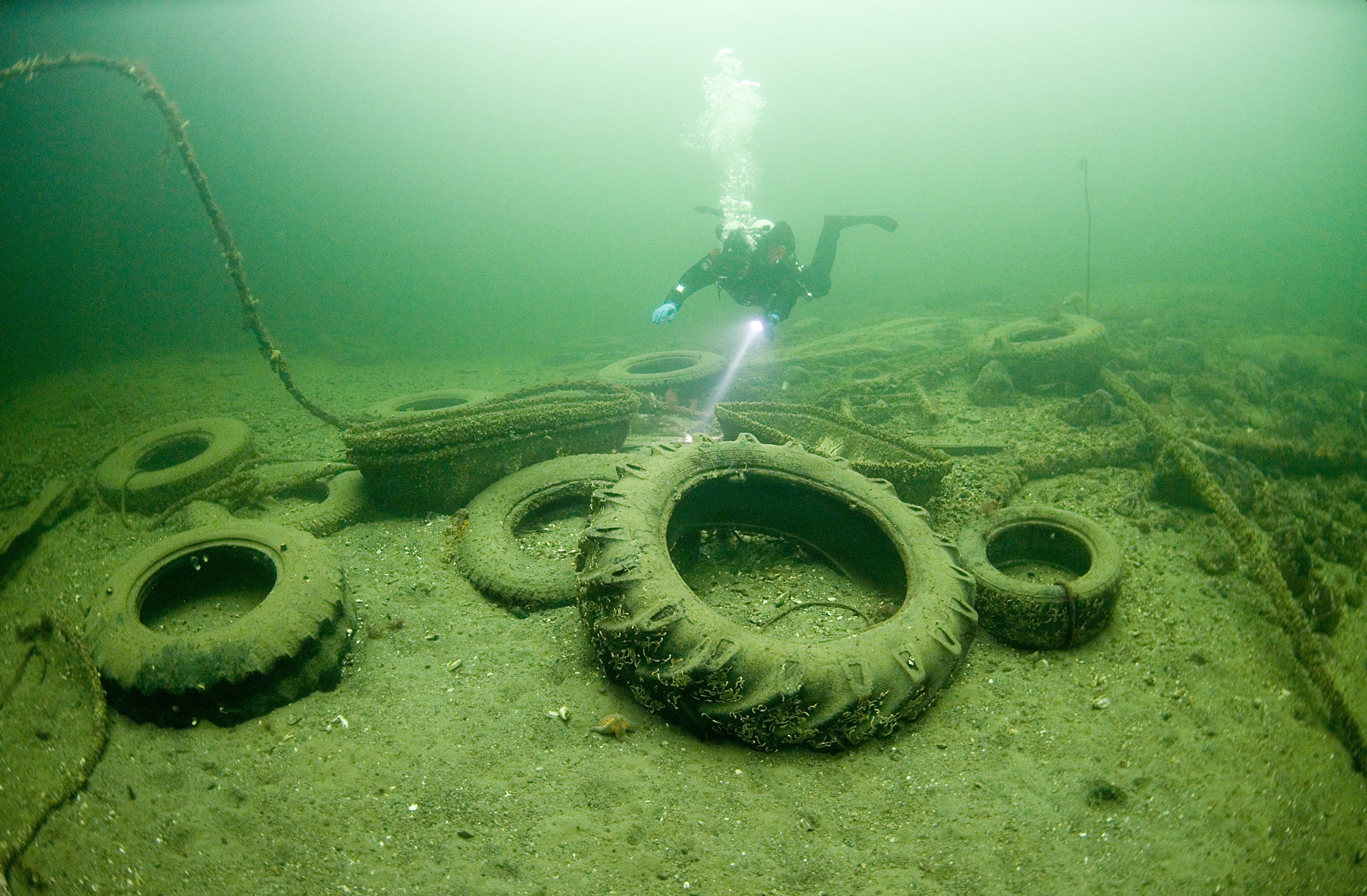
The Oslofjord is a sick patient in need of urgent medicine. Our fjord was previously one of the richest of its kind in the world, but has now become one of the poorest. It is important to keep in mind that the area "Oslofjord" includes both the municipalities that lie along the shores of the fjord, as well as those that lie in what we call the catchment area of the fjord.
In total, the Oslo Fjord consists of 118 municipalities with 2.8 million people. In other words, half of Norway's population lives in areas that have a direct impact on life in the Oslo Fjord.
The good news is that the Oslofjord can be saved and we know what it takes:
* Stricter rules for both recreational and commercial fishing. This includes introducing no-fishing areas from Moss – Horten and further into the fjord, as well as for the areas of Ytre Hvaler National Park and Færder National Park. This has been proposed by the Directorate of Fisheries, supported by the Directorate of the Environment and recommended by the country's leading marine scientists.
* Minimize runoff from agricultural areas. This means banning autumn plowing, stricter requirements for edge zones in agricultural areas, more and better forest protection, and more restoration of areas with bogs.
* Stop nitrogen pollution from wastewater. This must be done by putting in place stricter regulations and more treatment plants with better technology throughout the Oslo Fjord catchment area.
* Prohibition of development in the coastal zone in municipalities along the Oslo Fjord.
* That Norway follows a policy that cuts greenhouse gas emissions in line with the Paris Agreement, as the surface layer in the Oslo Fjord has also become one degree warmer since 1980 until today.
Bringing life back to the Oslofjord can certainly become a reality. It is primarily about one thing – namely will. Willingness to listen to science and to introduce the measures that nature in the Oslofjord needs. It will cost us all a little, but the payoff is a rich fjord with enormous natural values that will benefit both us and future generations!
Reading tips from Fredrik:
Read more here about why it should be "easy" to save the Oslo Fjord:
https://www.nettavisen.no/norsk-debatt/det-er-lett-a-redde-oslofjorden/o/5-95-1865685
Read more about why we generally need more and better marine protected areas along the coast and in the sea here:
https://www.wwf.no/dyr-og-natur/hav-og-fiske/marine-verneomrader

