

Edvard Munch in Åsgårdstrand
Art history was never the same again after Edvard Munch – not Åsgårdstrand either.
The place became redemptive for Munch as an artist, as a painter of the spiritual life of modern man. Here, the artist found inspiration for several decades – and man’s peace of mind and friendship. Here Munch turns away from the realism of the 1880s and seeks his romanticism in the strongest of nature; life itself. And here the landscape enters as a living link in his art. It is here that Munch becomes the painter of the bright, shadowless Nordic summer nights.
The human dramas in the Life Frieze - Munch's major artistic project - find their landscape and stage in Åsgårdstrand: "The frieze is conceived as a series of decorative images that together should give a picture of life. Through them winds the winding shoreline, beyond lies the sea, which is always in motion, and under the crowns of the trees the diverse life is lived with its joys and sorrows."
In the early years, Munch and his family rented accommodation at various addresses. After nine summers in Åsgårdstrand, Munch bought his first property here in 1898, today the Munch House museum. It is as if Munch developed an even stronger relationship with the place after buying the house. He himself describes the feelings surrounding having his first home of his own: “- It was strange to be so alone – in his own house. No one needed to disturb him. It was his property – it hadn’t cost much and it wasn’t nice, but it was his and out there in the garden were all his trees – the stones – the birds – the beach – and the water that washed against the stones. It was his sky up there and his star –”
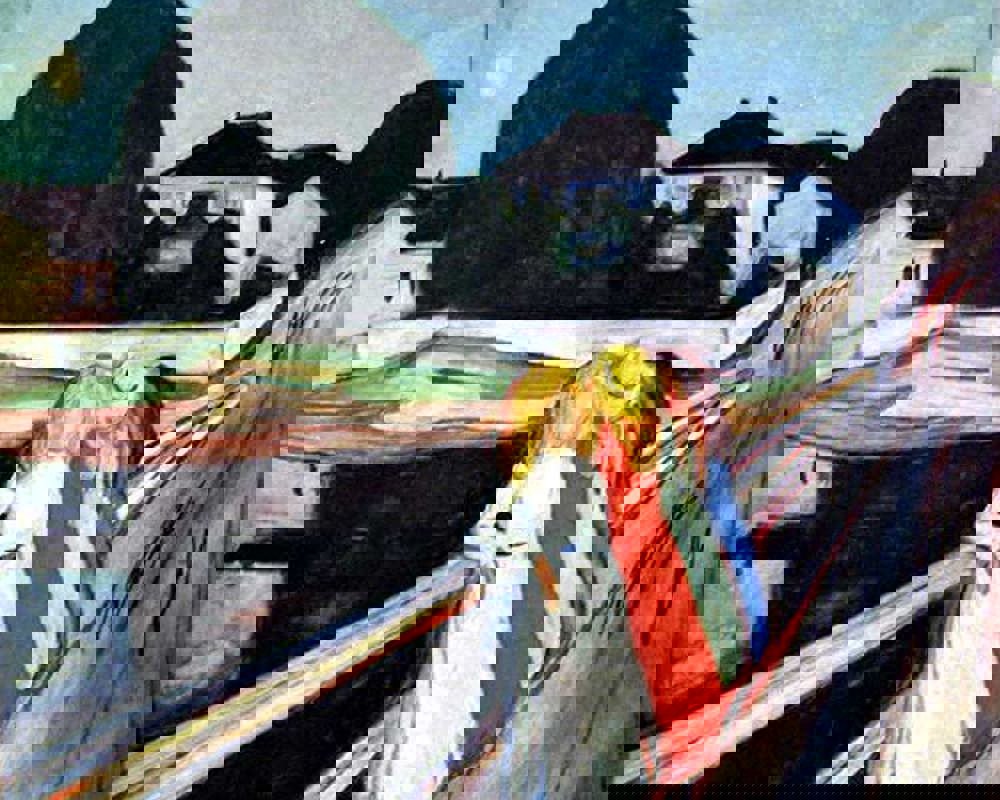
In terms of motifs, he now changes focus, and in the coming years paints a series of pictures showing the garden and the house, and everyday life in the city. It is also at this time that “The Girls on the Bridge” is created. The models are neighbor children, fishermen, helpers, friends and acquaintances. He was well liked by the locals, who talk about a hardworking, honest and generous man, who from abroad sent money to the local poor, gifts and birthday cards. Here in Aunt Karen's words "We enjoy great respect here among the population because of you - full credit with the fishermen, - when we don't have money on us, and hearing your name is enough."
It was for his house that Munch longed when he was abroad and at times felt down and tired. Then it was a comfort to plan the next summer in Åsgårdstrand. “I hope to get to my house early – I have a great longing for my house and for my work.”
Thus, Åsgårdstrand runs like a common thread through large parts of Munch's life and art. And today, visitors can walk in Munch's footsteps themselves: To places he painted, either on their own or participate in organized walks in Munch's landscape. They can visit and get a tour of Munch's house, which is actually the world's first Munch museum. And the only preserved, intact home of the world artist. A visit here touches people from all over the world.
The museum also offers various innovative digital experiences. Munch's House has developed an app that allows visitors to get an impression of how important the garden and property were to Munch. And in the old town hall in Åsgårdstrand, in "Digital Munch" you can experience Åsgårdstrand - seen through Munch's eyes. Here the universality of Munch's art is conveyed, here Munch's artwork from Åsgårdstrand is brought to life in a way that both surprises and evokes different emotions and moods.
Welcome to Munch's Åsgårdstrand!

